Thomas Fence builds with western red cedar almost exclusively. Japanese cedar goes in occasionally for a builder or a residential customer, but it is rare. Thomas Fence does not build with eastern red cedar at all, and at least one fence company in this market uses it as its standard picket. Those are the three names you will hear in Northwest Arkansas, they are three different woods, and the word cedar by itself does not tell you which is going in your yard.
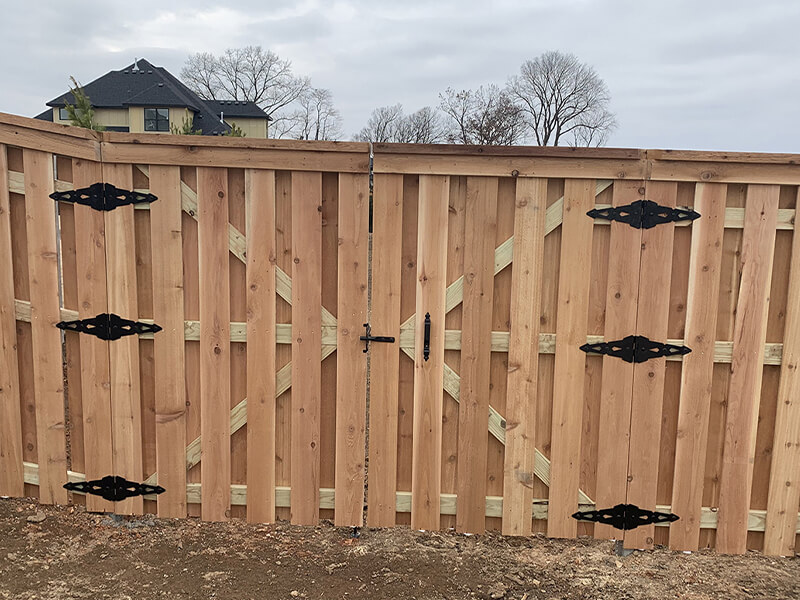
Why "cedar" on a bid does not tell you much
Two species dominate the fence market here, western red cedar and Japanese cedar, and they price very differently. Both get sold as cedar. Two bids can say cedar fence, at the same height and the same layout, and be quoting different fences.
Which species is on the estimate is the most useful question a homeowner can ask, and almost nobody asks it. Ask for it by name, of everyone bidding the job, us included.
Grade sits underneath the species question and it matters too. It is covered at thomasfencear.com/publications/not-all-cedar-fences-are-created-equal-what-you-need-to-know-before-you-buy/. Start with the species, because that is the layer that moves the price in front of you.
Western red cedar
This is what Thomas Fence puts in the ground on most jobs. It comes off the Pacific Northwest and British Columbia, and it is what most people picture in a Bentonville or Rogers backyard.
What it does well
- The wood carries natural oils and tannins that resist rot and insects without any chemical treatment.
- It stays where you put it, resisting the cupping, twisting and splitting that make a new fence look tired in its first summer.
- The cedar itself takes stain without a drying period, which pressure treated pine cannot do.
- Boards run long and straight, which shows on the long runs common to Springdale and Fayetteville lots.
What it costs you
- It is the premium material of the three, and the price shows up on the estimate.
- It marks easily. A mower, a ball, a dog or a ladder leaves a dent that shows. Pine, western red and Japanese cedar are all soft woods, so that is a wood fence trait rather than a reason to pick one over another.
- Not every board sold as western red cedar is the same board. Grade varies, and it is the second question to ask after species.
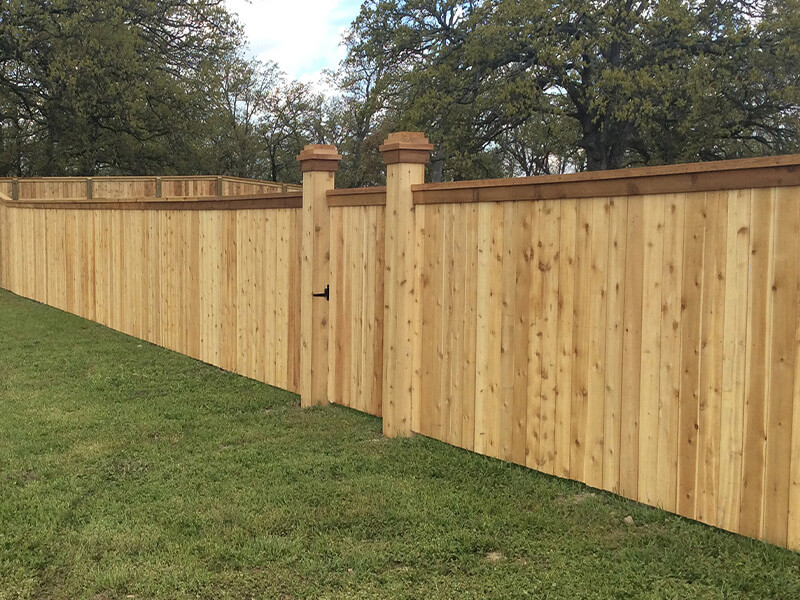
Expect the color to vary
Western red cedar runs a wide range. One board can be blonde with red streaks and the next red with a brown tint, with everything in between in the same load.
That is the tree and the cut, not a sorting problem. Color depends on which tree the board came from and where in that tree it was cut, so variation is expected in a new cedar fence.
Left alone the fence weathers toward silver gray and the differences close up, and stain on a cycle holds the color you put on it.
Japanese cedar
Japanese cedar, sold as sugi and botanically Cryptomeria japonica, is imported and has become a common fence board in this market. It is a legitimate choice and not a lesser one.
What it does well
- It comes in at a better price than western red cedar and is a real step up from pressure treated pine.
- It carries natural rot resistance rather than chemical treatment.
- It stains without a drying period, the same as any cedar.
- From the street, a Japanese cedar fence reads as a cedar fence.
What it costs you
- It is a lighter board than western red cedar and more likely to move as it dries.
- It runs lighter in color than western red on delivery.
- It is imported, so availability and pricing move with the import market in a way domestic material does not.
Western red cedar is the higher quality material. That does not automatically make it the better buy, because better depends on what you are measuring. Measured on price, Japanese cedar is the better number and a genuine improvement over treated pine. Measured on how the fence looks and behaves in year ten, western red is ahead. Both are correct answers to different questions.
Eastern red cedar
Eastern red cedar grows all over the Ozarks, and it is not a cedar. It is a juniper, Juniperus virginiana.
Thomas Fence does not build with it. It is on this page because at least one fence company here does, as its standard picket, so cedar on that estimate means a different wood than cedar on ours.
What it does well
- It is exceptionally rot resistant, which is why old farm posts cut from it are still standing in pastures around here.
- It is local, aromatic, and rustic in a way nothing else matches.
What it costs you
- The trees are knotty and irregular, so boards run narrower, shorter and less consistent than milled western red.
- It checks and splits as it dries, and it is brittle enough to crack when it is nailed.
The ladder, from a homeowner's point of view
For a wood privacy fence in Northwest Arkansas there are three rungs. Pressure treated pine is the entry, a good fence and the right call for a lot of yards, relying on chemical treatment rather than the wood's own oils. Japanese cedar is the middle, at a better price with the rot resistance built into the board. Western red cedar is the top on stability, on rot resistance and on price.
Nobody who buys the middle rung settled. What matters is knowing which rung you are on before you sign, because all three get written on an estimate as a wood fence.
What the species does not decide
Species picks how the wall of the fence performs. It does not pick how long the fence stands up.
Fences here do not usually fail at the pickets. They fail at the ground line of the posts, where wood meets wet dirt. Pine rated for ground contact is the better value in the hole, which is why the posts are pine even when every picket is cedar. Thomas Fence sets all posts in concrete on every material, which is standard practice rather than an upgrade line. Concrete holds as well as the ground around it holds.
There is an option that takes the posts out of the equation. Thomas Fence offers the PostMaster steel post in place of wood, a modified U channel rather than the galvanized round post some contractors use. It costs more, and it is the biggest single thing you can do for how long a cedar fence stands. More on wood construction at thomasfencear.com/fences/wood-fence/.
Staining, and the part of the fence that is not cedar
The cedar takes stain right away. The whole fence usually cannot.
A cedar fence here is generally cedar pickets on pine two by four rails and pine four by four posts. Pressure treated pine has to dry before stain will penetrate, and on a pine picket that is one to three months. Rails and posts are far less wood than a wall of pickets, so the wait is likely shorter. How much shorter is a question for whoever does the staining.
So a cedar fence is not ready to stain end to end the week the crew leaves. Ask the stain company what they want to do about the pine. Thomas Fence installs fences and does not stain them, and will refer you to companies that specialize in it. More questions like these are at thomasfencear.com/faqs/.
What to ask anyone bidding your fence
- Which species of cedar are you supplying, by name.
- What grade of wood.
- What are the posts, and are they set in concrete.
- Is a steel post option available on this fence.
The first question separates two bids that look identical on paper. Whichever cedar goes in on a Thomas Fence job, the one year craftsmanship warranty reads the same.
Residential wood work across Northwest Arkansas is at thomasfencear.com/fences/residential-fencing/.
Questions people ask
What species of cedar does Thomas Fence use?
Western red cedar almost exclusively. Japanese cedar goes in occasionally for a builder or a residential customer, but it is rare. Thomas Fence does not build with eastern red cedar. Western red and Japanese cedar both sell as cedar and price very differently, so ask which one is on the estimate.
Is Japanese cedar a good fence board?
Yes. Japanese cedar, sold as sugi, is a legitimate choice and not a lesser one. It comes in at a better price than western red cedar, carries natural rot resistance, stains without a drying period, and reads as a cedar fence from the street. It is a lighter board and more likely to move as it dries.
Why does the color vary on a new western red cedar fence?
Western red cedar runs from blonde with red streaks to red with a brown tint in the same load. Color depends on which tree the board came from and where in that tree it was cut, so variation is expected. Left alone the fence weathers toward silver gray and the differences close up. Stain on a cycle holds the color.
Why does Thomas Fence not build with eastern red cedar?
Eastern red cedar is a juniper, not a true cedar. The trees are knotty and irregular, so boards run narrower, shorter and less consistent than milled western red. It checks and splits as it dries and is brittle enough to crack when nailed. It is on the page because at least one fence company in this market uses it as a standard picket.
Can a cedar fence be stained the week it is installed?
The cedar pickets can. The whole fence usually cannot, because a cedar fence here is generally cedar pickets on pressure treated pine rails and posts, and pine has to dry before stain will penetrate. Ask the stain company what they want to do about the pine. Thomas Fence installs fences and does not stain them.
What should I ask anyone bidding a cedar fence?
Four questions. Which species of cedar are you supplying, by name. What grade of wood. What are the posts, and are they set in concrete. Is a steel post option available. The first question separates two bids that look identical on paper, because western red and Japanese cedar price very differently.
To talk about a fence in Northwest Arkansas, contact Thomas Fence at thomasfencear.com/contact/ or call (479) 636-4732. Thomas Fence, 653 Kawneer Dr, Springdale, AR 72764.