Cedar is the most popular wood for privacy fences in Northwest Arkansas, and it has earned that. It resists rot and insects on its own, it handles our wet winters and humid summers, and it looks right the day it goes up. What most homeowners do not know is that two fences that are both sold as cedar can be twenty years apart in how long they last. The difference is in the boards, the posts, and how the fence is built, and every one of those is something you can ask about before you sign.
Thomas Fence has built wood fences in Springdale, Rogers, Bentonville, Fayetteville, Bella Vista and Siloam Springs since 1993. We have replaced a lot of cedar fences that failed early. Almost none of them failed because cedar is a bad material. They failed because of what was under the word cedar on the invoice. This guide covers what to look for and what to ask.
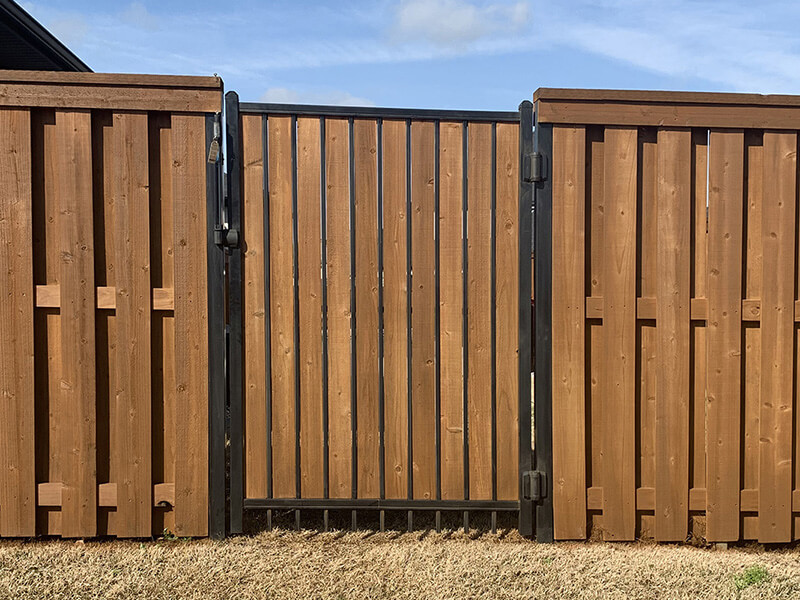
How long does a cedar fence last in Northwest Arkansas?
A cedar fence built with good boards on sound posts lasts 15 to 20 years here, and a well kept one goes longer. A cedar fence built with low grade boards on posts set in dirt can lean inside five years. Same word on the estimate, very different fence.
Three things decide which one you get: the grade and heartwood content of the boards, how dry the wood was when it went up, and how the posts were set. The sections below take them in order.
Cedar grades, and why the grade is only half the story
Cedar is sold in grades. The grade describes how tight the grain is, how many knots the board carries, and how much of it is heartwood.
- #1 grade, sometimes called clear. Tight grain, few knots, mostly heartwood. This is the premium board. It costs more, and the natural oils in the heartwood are what give cedar its rot resistance.
- #2 grade, sometimes called standard. Some knots and more sapwood. It makes a sound fence when it is built and kept properly. It does not last as long as #1.
- #3 grade and below. Loose grain, large knots, mostly sapwood. This is often what is on the shelf as "cedar fence boards." It weathers fast and it is the grade behind most of the early failures we replace.
Ask the contractor: "What grade of cedar boards are you using?" A contractor who orders cedar every week knows the answer without looking it up. "Standard lumber yard cedar" is not an answer.
Heartwood and sapwood
This matters more than the grade stamp. Heartwood is the dense inner wood of the tree. It is darker, red to brown, and it carries the oils and tannins that repel water and insects. Sapwood is the pale outer wood near the bark. It has almost none of the protection cedar is known for.
A board can be stamped #1 and still carry a wide band of sapwood if it came from the outside of the log. You can see it. Heartwood is red-brown. Sapwood is pale yellow to white. When you compare bids, ask to see a board, not a label.
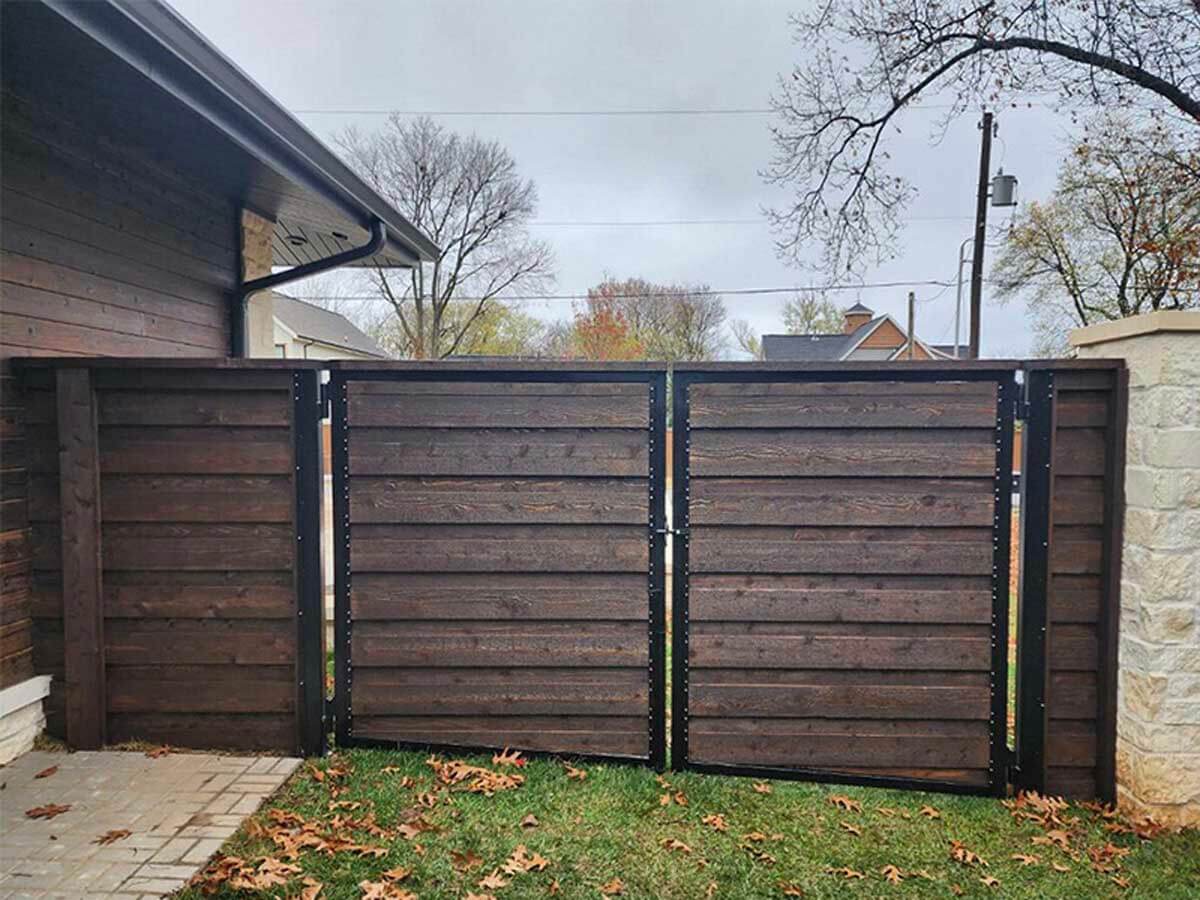
Moisture: the reason a new fence warps in its first summer
Freshly cut cedar is wet. As it dries it shrinks, and if it dries after it is nailed to your fence, the boards cup, twist and split. A fence that looked straight in March and looks rough by August usually went up green.
Kiln dried cedar has had the moisture taken out under control, so it holds its shape. Air dried cedar is fine when it has been stacked and stored properly. Ask which one is going on your fence. In an Arkansas summer the difference shows inside one season.
What causes fence posts to rot, and how to prevent it
Most fences do not fail at the boards. They fail at the ground line of the posts. A leaning fence is almost always a post problem, and the pickets and rails above it are usually fine. Here is what rots a post and what prevents it.
- Ground contact with the wrong wood. Cedar pickets are the right board above ground. Below ground, most residential fences in Northwest Arkansas use pressure treated pine posts rated for ground contact, or steel posts. A cedar post in wet clay does not outlast a treated one.
- Posts set in dirt. A post set in soil sits in water every time it rains. Thomas Fence sets every post in concrete as standard practice. We dig the hole, set the post, plumb it, and pour the concrete around it. A fence is only as straight as its posts.
- Water standing at the post. Low ground that holds water after a storm rots any post faster. Grading the soil away from the post line and keeping mulch and soil from piling against the bottom of the fence adds years.
- Undersized posts. A six foot privacy fence catches wind like a sail. The post size and depth carry that load. A post that is too small or too shallow works loose at the ground line, and the movement opens the wood to water.
Ask the contractor: "Are all posts set in concrete, and what are the posts made of?" Any quality fence contractor in Northwest Arkansas sets posts in concrete. If it is presented as an option, keep looking.
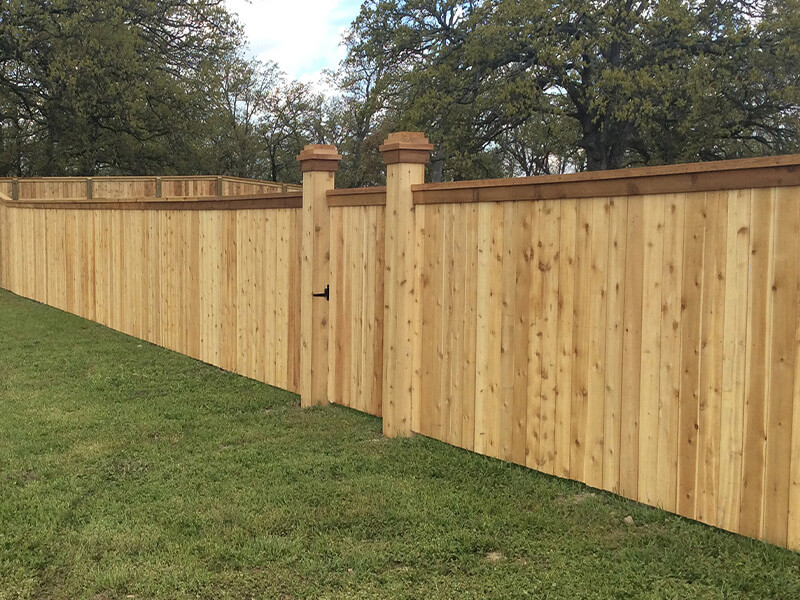
Cedar or pressure treated pine?
Both are good fences, and Thomas Fence builds both. Cedar resists rot on its own, takes stain right away, and lasts longer in the same conditions. Pressure treated pine is treated with a preservative to resist rot, costs less, and is the right choice for a lot of residential yards. Which one fits your project depends on budget, the look you want, and whether you plan to stain. Your estimator walks through it with you on site.
How long to wait before staining
This comes up on nearly every wood fence we build, and the answer depends on the wood.
- Cedar: it can be stained right after installation. Cedar's low moisture content means it takes stain right away.
- Pressure treated pine: wait one to three months. The treatment and the moisture in the wood need time to dry out. Stain applied too early traps moisture and does not penetrate.
Thomas Fence installs fences and does not stain them. We are glad to refer you to staining companies in Northwest Arkansas who do that work well.
What happens after you say yes
Work starts one to three weeks after you accept the estimate. Before any digging, Thomas Fence calls Arkansas 811 for the utility locate, which state law requires, and that takes two full business days. Private lines are not marked by 811, so tell your estimator about septic, irrigation, outbuilding electric or pool gas lines. A typical residential fence takes two to three business days to install. Permits are the homeowner's to pull, and our permits page links to each town. No deposit is required on standard residential work. Every fence carries a one year craftsmanship warranty, in writing.
Questions to ask any fence contractor before you buy
- What grade of cedar boards are you supplying?
- Which species of cedar are you supplying? Western red and Japanese cedar both sell as cedar and price very differently. See thomasfencear.com/publications/what-species-of-cedar-is-your-fence-western-red-japanese-and-eastern-red-cedar-in-northwest-arkansas/.
- Are the boards green, air dried, or kiln dried?
- What are the posts made of, and what size?
- Are all posts set in concrete?
- Who calls 811, and when does work start?
- What is your craftsmanship warranty, and is it in writing?
- Are you a licensed contractor in Arkansas?
Thomas Fence holds Arkansas Contractor License No. 0155010427, held since 2005, and is an AFA Certified Fence Contractor. We answer every one of these questions before you decide, with no pressure and no deposit on standard residential work.
Questions people ask
How long does a cedar fence last in Northwest Arkansas?
It depends on three things: the grade and heartwood content of the boards, how dry the wood was when it went up, and how the posts were set. Fences here rarely fail at the pickets. They fail at the ground line of the posts, so post material and concrete decide more about lifespan than the cedar does.
What grade of cedar is best for a fence?
#1 grade, sometimes called clear. Tight grain, few knots, mostly heartwood, and it costs more. #2 standard has some knots and more sapwood and makes a sound fence when built and kept properly. #3 and below is often what is on the shelf as cedar fence boards, weathers fast, and is behind most early failures.
What is the difference between cedar heartwood and sapwood?
Heartwood is the dense inner wood, red to brown, carrying the oils and tannins that repel water and insects. Sapwood is the pale outer wood near the bark with almost none of that protection. A board stamped #1 can still carry a wide band of sapwood, so ask to see a board, not a label.
What causes fence posts to rot?
Ground contact with the wrong wood, posts set in dirt instead of concrete, water standing at the post, and undersized or shallow posts. Cedar pickets are right above ground. Below ground, most residential fences here use pressure treated pine posts rated for ground contact, or steel posts, set in concrete.
Cedar or pressure treated pine, which should I choose?
Both are good fences and Thomas Fence builds both. Cedar resists rot on its own, takes stain right away and lasts longer in the same conditions. Pressure treated pine is treated to resist rot, costs less and is the right choice for a lot of yards. Which one fits depends on budget, the look you want and whether you plan to stain.
How long should I wait before staining a new cedar fence?
The cedar can be stained right after installation. Pressure treated pine, which is usually the posts and rails under cedar pickets, waits one to three months so the treatment and moisture can dry out. Stain applied too early traps moisture and does not penetrate. Thomas Fence does not stain fences but will refer you to companies that do.
To talk about a wood fence in Northwest Arkansas, contact us here or call (479) 636-4732. Thomas Fence, 653 Kawneer Dr, Springdale, AR 72764.