When most people think of a fence, they think of a permanent structure — posts set in concrete, rails attached, pickets installed. But a significant portion of fencing installed in Northwest Arkansas every year is temporary. Construction sites, outdoor events, crowd management, property access control — temporary fencing solves a range of problems that permanent fencing can't.
At Thomas Fence, we've been installing temporary fencing throughout Springdale and the surrounding region since 1993. This guide covers what temporary fencing is, where it's used, what's available, and what you need to know about permits before you call.
What Temporary Fencing Is — and What It's Not
Temporary fencing is any fence system designed to be installed, used for a defined period, and then removed. The posts are typically driven or base-mounted (not embedded in concrete), the panels are modular and reusable, and the entire system can be set up and taken down without leaving a permanent mark on the ground.
Temporary fencing is not just chain link panels propped up on weighted feet. Modern temporary fencing systems include options for appearance, privacy, security, and crowd management — all while remaining fully relocatable.

Common Uses in Northwest Arkansas
Construction Site Security
The most common use in Springdale and the surrounding area. Construction sites are required to control access and prevent unauthorized entry, especially when excavation is active, equipment is on-site, or hazardous materials are present. Temporary chain link fencing with privacy screening is the standard solution — it's fast to install, highly visible, and provides a clear perimeter.
Special Events
Outdoor concerts, festivals, sporting events, and private gatherings all benefit from temporary fencing. Event fencing serves several functions simultaneously: crowd management, ticketed area control, emergency exit routing, and vendor area delineation. Northwest Arkansas's growing event scene — including events around the Walmart AMP and Bentonville's cycling infrastructure — has increased demand for event-grade temporary fencing significantly.
Property Access Control
During construction of a new home or commercial building, a temporary fence establishes the work zone, keeps children and pets out of an active site, and signals to neighbors and passersby that the site is managed. It can also protect landscaping and finished areas from equipment traffic.
Utility and Infrastructure Work
Road crews, utility companies, and municipal contractors use temporary fencing to secure work zones and protect the public from open trenches, exposed utilities, and equipment movement.
Thomas Fence installs temporary fencing for contractors, property owners, and event organizers throughout NWA. If you need a temporary fence for any duration, contact us here to discuss your timeline and requirements.

Types of Temporary Fencing
Standard Chain Link Panels
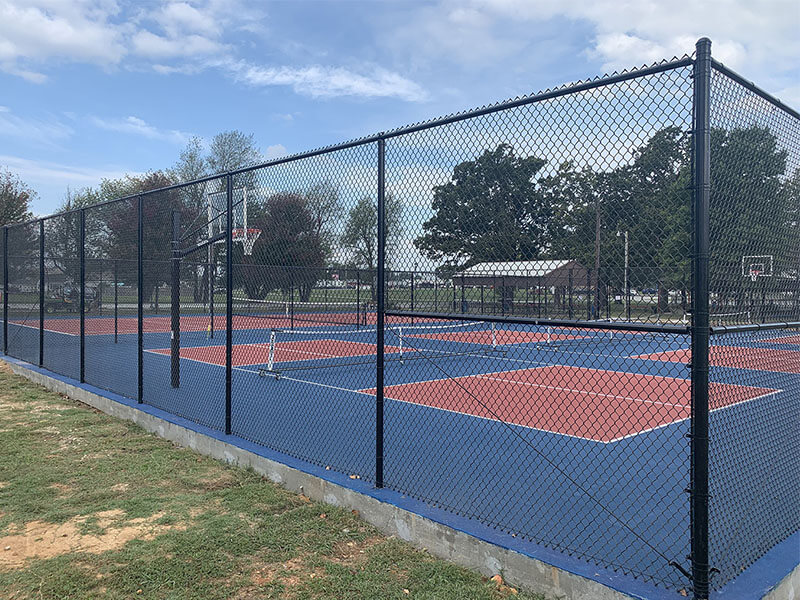
The workhorse of temporary fencing. Galvanized chain link panels — typically 6 feet tall by 10 or 12 feet wide — are connected with sleeves and supported by driven posts or weighted base stands. Fast to install, highly durable, and easy to reconfigure as site conditions change.
Chain Link With Privacy Screening
Standard chain link panels with windscreen fabric woven through or attached to the chain link. Common on construction sites adjacent to occupied buildings or roadways. The screening reduces dust and debris migration onto neighboring properties and provides some visual separation from the work zone.
Anti-Climb Security Fencing
Higher-security temporary options with smaller mesh openings (making footholds difficult), topped with razor wire or barbed wire. Used for higher-risk construction sites, equipment storage yards, and situations where unauthorized access is a more significant concern.
Pedestrian Barrier/Crowd Control Fencing
Lower-height interlocking steel barricades. Used at events to channel foot traffic, create queuing areas, and establish soft boundaries between crowd zones. Not a security fence — designed for crowd management, not access prevention.
Permit Requirements in Springdale
This is where temporary fencing gets more complicated, and it's where we see the most confusion from property owners calling us.
In Springdale, temporary fencing permit requirements vary by location and use type:
- Construction site fencing: Generally required as part of the overall building permit. The contractor is responsible for verifying compliance with City of Springdale requirements.
- Event fencing on private property: May or may not require a permit depending on the duration, the event type, and whether it affects adjacent ROW or pedestrian access. When in doubt, contact the City of Springdale Building Department before installation.
- Fencing in or adjacent to public right-of-way: Always requires a permit from the city or county transportation department.
Thomas Fence pulls permits as required for permanent fence installations. For temporary fencing, permit responsibility typically falls on the property owner or event organizer — we'll advise you on what to check, but the permit must be in the name of the party authorizing the work.
The permit landscape in NWA changes frequently as municipalities update their codes. Always verify current requirements directly with the city or county before starting any fencing project. For Springdale: (479) 756-8200, Building and Development Services.
How Long Does Installation Take?
A typical construction site perimeter fence — say, a standard residential lot in Springdale — can be installed in a few hours by an experienced crew. Larger commercial sites, depending on linear footage and site conditions, may require a full day. Event fencing is typically staged the day before the event and removed the day after.
Thomas Fence coordinates with your project schedule. If you have a hard start date — a groundbreaking, an event load-in, an inspection that requires the perimeter to be up — tell us when you call so we can plan accordingly.
Does Temporary Fencing Require Utility Locates?
This depends on whether posts are being driven into the ground. If we're using weighted base stands (the standard for most event fencing and some construction site fencing), no utility locate is needed — nothing is going underground.
If posts are being driven, we call One Call regardless of the temporary nature of the fence. Arkansas requires it, and it's the right thing to do. Utility locates take 2 full business days — factor that into your timeline if driven posts are part of your plan.
If you're planning a temporary fence project in Springdale, Bentonville, Rogers, or anywhere else in NWA, reach out to Thomas Fence. We've been doing this long enough to know how to get it done right and on schedule.
Questions people ask
What is temporary fencing?
Any fence system designed to be installed, used for a defined period and then removed. Posts are driven or base mounted rather than set in concrete, panels are modular and reusable, and the whole system comes down without leaving a permanent mark on the ground. Modern systems include options for privacy, security and crowd management.
What is temporary fencing used for in Northwest Arkansas?
Construction site security is the most common use. Outdoor events and crowd management, property access control during a build, and utility and infrastructure work zones follow. Thomas Fence installs temporary fencing for contractors, property owners and event organizers throughout the region.
What types of temporary fencing does Thomas Fence install?
Standard galvanized chain link panels, typically six feet tall by ten or twelve feet wide. Chain link with privacy screening for sites next to occupied buildings or roads. Anti-climb security fencing with smaller mesh for higher risk sites. And pedestrian barricades for crowd control at events.
Do I need a permit for a temporary fence in Springdale?
It depends on location and use. Construction site fencing is generally covered under the building permit. Event fencing on private property may or may not need one. Fencing in or next to a public right of way always requires a permit. Contact the City of Springdale Building Department when in doubt.
Who is responsible for the temporary fence permit?
The property owner or event organizer. Thomas Fence advises on what to check, but the permit must be in the owner's or organizer's name. For construction sites, the contractor is responsible for verifying compliance with City of Springdale requirements as part of the overall building permit.