Vinyl lasts longer with less work. Wood costs less to put up and can be repaired one board at a time. Neither is right for every yard in Northwest Arkansas, and anyone who tells you there is a single winner is selling you something. The question is which material fits your yard, your patience for maintenance, and how long you plan to own the house.
Lifespan
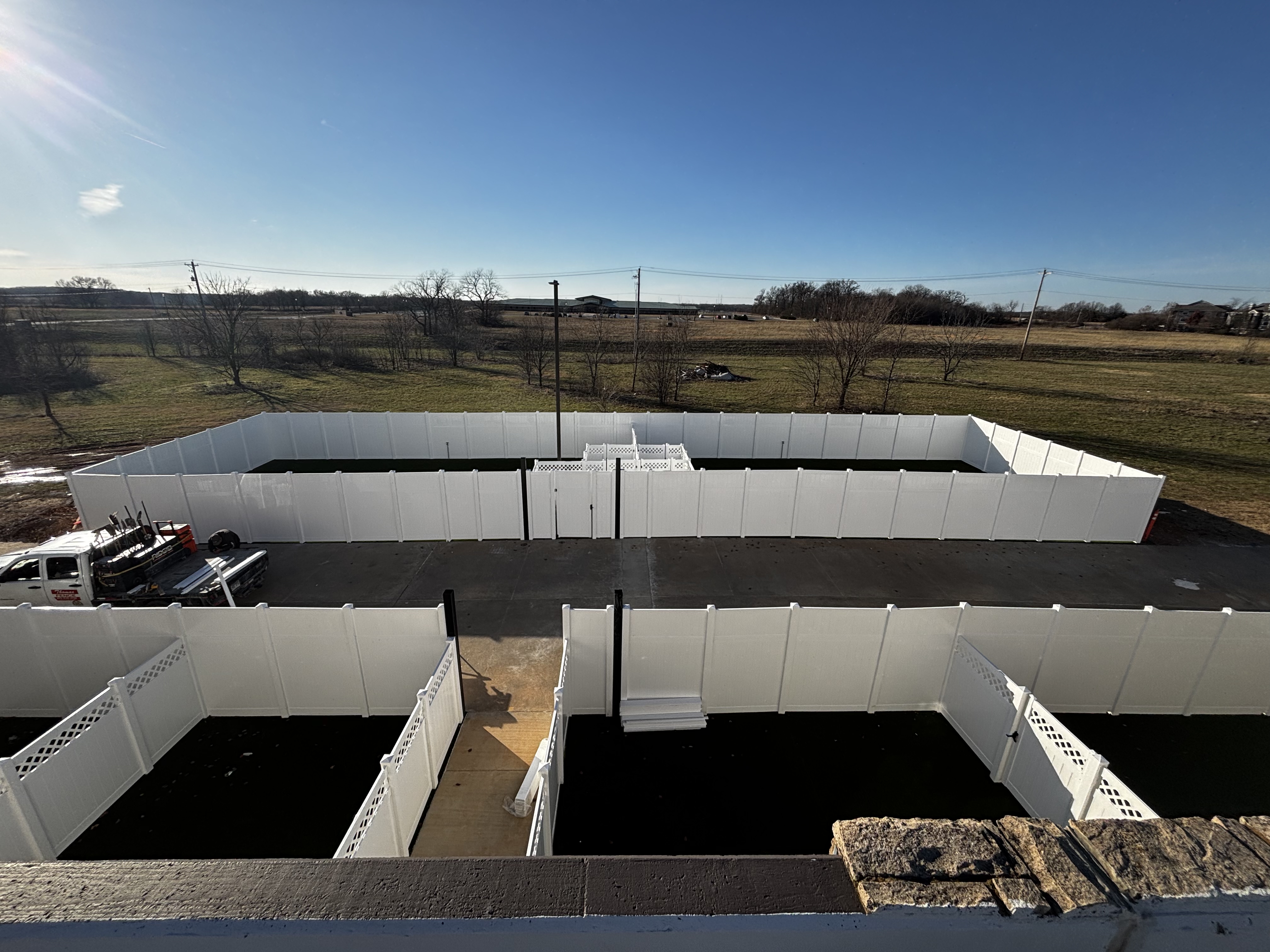
Vinyl does not rot, splinter, or absorb moisture. Those three things are what eventually kill a wood fence in this climate. Installed correctly, a vinyl fence generally outlives a wood fence built the same way on the same property.
Wood is a different kind of long. A cedar fence built from good material serves a yard here for many years, and what eventually needs work is almost never the pickets. It is the posts, which rot at the ground line where wood meets wet dirt. That is where the clock runs.
One question does more work than any other on a wood bid: which cedar? Two species dominate this market and they price very differently. Western red cedar is the higher quality material, and it is what Thomas Fence builds with almost every time. Japanese cedar comes in at a better price and is a real step up from treated pine, which makes it a legitimate choice rather than a lesser one. Which is better depends on what you are measuring. A bid that says only "cedar" has not told you which one, and two bids that both say cedar can be quoting different fences. Ask the species by name. More at thomasfencear.com/publications/not-all-cedar-fences-are-created-equal-what-you-need-to-know-before-you-buy/.
There is also a way to take the posts out of the equation. Thomas Fence offers a steel post option, the PostMaster, in place of wood. It is a modified U channel rather than the galvanized round post some contractors use, and Thomas Fence does not install round posts. The fence still reads as wood from either side. It costs more, and on a cedar fence it is the biggest single thing you can do for how long it stands, because it removes the part that rots.
Upkeep
This is where the two materials are least alike.
Vinyl is essentially maintenance free. No painting, no staining, no rot treatment. An occasional rinse with a garden hose keeps it looking the way it did the week it went in. For a homeowner who does not want a recurring outdoor project, that is the argument.
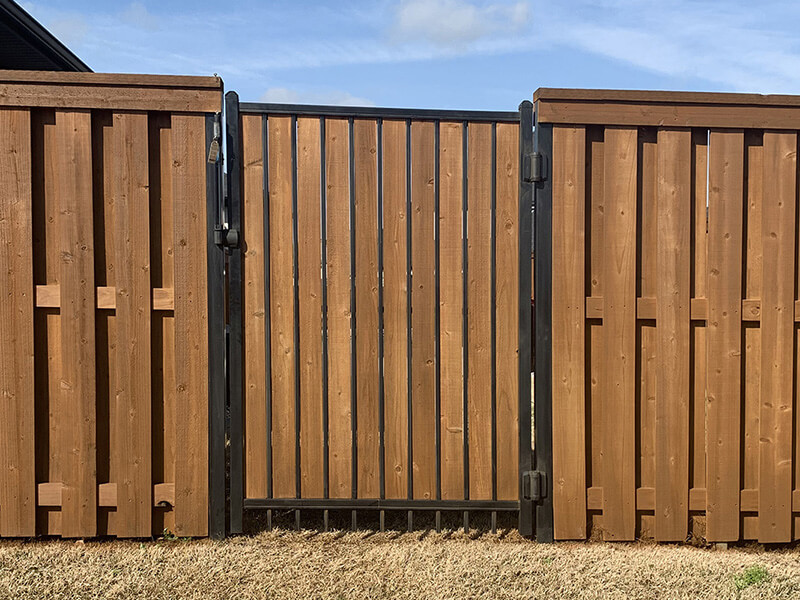
Wood asks for something back. It wants sealing or staining on a cycle, and a fence that never gets that attention weathers to gray and dries out faster. Some people want the gray, which is a legitimate choice and costs nothing. But wood left alone in Springdale humidity has a shorter life than the same fence maintained.
Thomas Fence installs fences and does not stain them, but will refer you to companies that specialize in it.
Staining timing
If you go with wood, the timing depends on the species.
The cedar itself can be stained immediately after installation. The whole fence usually cannot, because the rails and posts under cedar pickets are pine, and the pine has to dry first.
Pressure treated pine waits one to three months. The treatment and the moisture need time to dry out. Stain applied too early traps moisture and does not penetrate, so you pay for the work and get a worse result.
Most residential fences here use pressure treated pine for the posts and the rails even when the pickets are cedar. Pine rated for ground contact is the better value in the hole, and pine rails are standard. So a cedar fence is not ready to stain end to end the week the crew leaves. Ask the stain company what they want to do about the pine. Steel posts have neither problem.
Vinyl skips this section. There is nothing to stain.
Wind
A solid privacy fence of either material is a wall the wind has to go around. What holds a fence up in a storm is not the pickets. It is the posts and how they were set.
Thomas Fence sets all posts in concrete on both vinyl and wood. That is standard practice and the right way to do it. If you are comparing bids and concrete is presented as an upgrade rather than the standard, that tells you something.
Concrete is not a guarantee. A post set in concrete holds as well as the ground around it holds. On ground recently disturbed, cut or filled and still settling, the concrete settles along with it. If your fence line crosses a new build pad, a filled slope, a backfilled trench or a spot where something was torn out, say so before the estimate. That is a site condition, not a defect, and it changes how the fence is built.
Where the materials differ in a storm is what happens when something hits them. Vinyl gets brittle in cold weather, which does not matter on an ordinary winter day and matters in an ice storm with limbs coming down. Wood takes a hit by breaking a board or two.
Repair
Wood repairs one piece at a time and cheaply. A cracked picket comes off and a new one goes on, and the new board will not match until it weathers too.
Vinyl repairs by panel or section, and it is more of a matching exercise, because a panel that has been in the sun for years has faded slightly against a new one. Quality vinyl is stabilized against ultraviolet light to slow this, but nothing outdoors is immune. This is one of the few places where wood clearly wins.
What most vinyl around here actually is
The word vinyl makes people picture a white privacy wall. The vinyl Thomas Fence installs most often is rail fence, usually three rail, chosen over dimensional pine for the same look without repainting or rot. On acreage and along drives, that is the common vinyl job.
One distinction matters if animals are involved. There is livestock grade vinyl rail, and there is everything else. The livestock grade is built to take an animal leaning on it. If the fence will hold horses or cattle, say so at the estimate. Ordinary rail vinyl is not that fence.
Color and fading
Vinyl comes in white, tan, gray and woodgrain, in full privacy, semi privacy and decorative picket styles. The color is the material rather than a coating, so it does not peel or flake, and it lightens over years of sun gradually and evenly.
Wood starts one color and ends another unless you intervene. Fresh cedar is a warm red brown. Left alone it goes silver gray. Stained on a cycle it stays where you put it.
Cost over ten years, in relative terms
Wood costs less to install, which is why it is the most common fence in Northwest Arkansas. Over ten years it adds staining on a cycle, the odd board, and eventually posts. Vinyl costs more the day it goes in and then asks for close to nothing.
So the comparison turns on whether you do the maintenance. Stain on schedule and a wood fence runs at its best, with the ten year total still likely below vinyl. Skip it and you pay the low install price, then pay again sooner in fence life. Steel posts move the biggest long term cost out of the wood column.
Selling in a few years, the up front number matters more. Staying in the house, the ten year number does.
Which yard suits which
Wood suits a large yard with a long run of fence, a homeowner who likes cedar and does not mind a maintenance day, a property where a limb or a mower takes out a board now and then, and an older Fayetteville or Springdale street where wood is what everything else looks like.
Vinyl suits a homeowner who wants to be done. It suits a pool surround, a yard where dragging a stain sprayer around obstacles is the last thing you want, and a Bentonville or Rogers subdivision wanting a uniform look. Vinyl rail suits acreage and drives.
Read both service pages at thomasfencear.com/fences/vinyl-fence/ and thomasfencear.com/fences/wood-fence/, then have someone look at the yard. Site conditions change the recommendation more than any article can.
Questions people ask
Which lasts longer in Northwest Arkansas, a vinyl fence or a wood fence?
Vinyl. It does not rot, splinter or absorb moisture, the three things that eventually kill a wood fence in this climate. A cedar fence built from good material serves a yard for many years, and what needs work first is almost never the pickets. It is the posts, which rot at the ground line.
Which fence costs less, vinyl or wood?
Wood costs less to install, which is why it is the most common fence in Northwest Arkansas. Over ten years it adds staining on a cycle, the odd board and eventually posts. Vinyl costs more the day it goes in and then asks for close to nothing. Stain on schedule and the ten year total for wood still likely lands below vinyl.
How much maintenance does a vinyl fence need?
Almost none. No painting, no staining, no rot treatment. An occasional rinse with a garden hose keeps it looking the way it did the week it went in. Vinyl gets brittle in cold weather, so an ice storm with limbs coming down can crack a panel, and repairs are by panel or section rather than one board.
How soon can a new cedar fence be stained?
The cedar pickets take stain immediately. The whole fence usually cannot, because most residential fences here use pressure treated pine for the posts and rails even when the pickets are cedar, and pine waits one to three months to dry. Ask the stain company what they want to do about the pine.
Does Thomas Fence set fence posts in concrete?
Yes, on both vinyl and wood, as standard practice. Concrete is not a guarantee. A post set in concrete holds as well as the ground around it holds, so on a new build pad, a filled slope or a backfilled trench that is still settling, say so before the estimate. Steel posts are an option on wood fences.
What kind of vinyl fence does Thomas Fence install most?
Rail fence, usually three rail, chosen over dimensional pine for the same look without repainting or rot. On acreage and along drives that is the common vinyl job. If the fence will hold horses or cattle, say so at the estimate, because livestock grade vinyl rail is built to take an animal leaning on it and ordinary rail vinyl is not.
To talk about a fence in Northwest Arkansas, contact Thomas Fence at thomasfencear.com/contact/ or call (479) 636-4732. Thomas Fence, 653 Kawneer Dr, Springdale, AR 72764.