A leaning fence is almost always a post problem, not a fence problem. That one sentence settles more of these calls than anything else. When two or three posts have failed and the rest of the run is sound, that is a repair. Replacement enters the conversation when the failures stop being individual and start being a pattern. This article lays out the test Thomas Fence uses, so you can look at your own fence and have a fair idea which way it goes.
Why a fence leans
Three causes, and they are not the same problem even though they look identical from the patio.
The post rotted. Wood rots at the ground line, right where the post comes out of the dirt and meets air and water at once. The post stops holding, the rails have nothing to hang on, and that section pulls over and takes its neighbors with it.
Wind pulled the footing loose. The post is sound and so is the concrete, but a hard wind worked the whole footing in the ground until it moved. Nothing rotted, and the fence still leans.
The posts were never set deep enough. Wind finds this one eventually. The post is fine and the concrete is fine, there is just not enough of it in the ground. This is the case people get wrong, because nothing is broken and nothing is rotten, so it looks like something you can straighten. It is not. The posts come out and go back in deeper. Nothing else stabilizes it.
So the first move is not to look at the fence. Push on each post along the lean. A sound, properly set post does not move. Then work out why it moved. Soft wood at the ground line means rot. A post that rocks with its concrete still attached means depth or a worked footing.
When it is a repair
Two or three posts gone in an otherwise sound fence is a repair, and the most common fence service call there is.
The failed post comes out, old concrete footing and all, which is the part that takes the time. A new post goes in, set in concrete and plumbed, then the rails and pickets go back on. That section ends up the strongest part of the fence.
Other clear repair situations:
- A limb came down and broke pickets. Boards come off, new boards go on. The new wood will not match until it weathers too.
- A gate has dropped or drags. Gates are the only part of a fence that moves, so they work hardest. A sagging gate is often a hinge, a post or a missing brace, all fixable.
- A section blew over but the posts held. If the posts are sound, the rest is carpentry.
- Rails have pulled loose in a place or two. Usually warping rather than failed fasteners, and refastening is quick.
What moves it to replacement
Three patterns change the answer. Any one is serious and two together settle it.
Posts gone across most of the run, whether from rot or from depth. If most of them move, you do not have a repair. You have a fence failing everywhere at once that fell down in a couple of places first. Replacing posts one at a time down a whole line costs more in labor than replacing the fence, and you end up with new posts holding old pickets.
Rails pulling loose in many places. This gets misread as a fastener problem and it is not. The nails and screws are rarely what failed. The post and the rail have warped away from each other and the wood pulled itself off the fastener, which is why refastening a warped rail buys very little. All down the fence, the wood is done.
A fence set in dirt on ground that holds water. Some fences were never set in concrete. Posts tamped into dirt where drainage is poor are on a much shorter clock and fail in groups rather than one at a time. If your fence was set in dirt and your yard stays wet, the whole run reaches the end together.
How the call gets made
Weigh the cost of the repair against the life left in the fence. That is the whole test. A repair on a fence with good years left is worth doing. A repair on a fence that will need three more repairs in two years is money spent twice.
You do not have to work this out alone. The Thomas Fence sales consultant prices both paths on the same visit, replacing the fence and replacing only the posts, and walks you through what each buys. That is someone who has seen a lot of fences reach this point and knows what holds up, so the conversation is about a stable fence for the least money rather than the bigger number. Ask for both prices. And if you were thinking about changing materials anyway, say so. Wood is at thomasfencear.com/fences/wood-fence/.
The answer is not always the expensive one. A fence that looks bad from the patio may need two posts and an afternoon, and one that looks fine from the house can be soft at the ground line down its whole length.
Storm damage
Northwest Arkansas storms take fences down two ways, handled differently.
Impact. A tree or a large limb comes down. Posts under it may be broken or driven out of plumb and the pickets and rails in that stretch are destroyed, while the rest is untouched. Usually a repair, and the scope is whatever the tree touched.
Wind. A solid privacy fence is a wall the wind has to go around, and a straight line wind pushes on the whole run at once. What fails is whatever was weakest, whether that is rot, a loose footing or posts that were never deep enough. A storm usually reveals a condition rather than causing one.
If you carry homeowners insurance, storm damage may be covered. Ask your carrier before you decide, and expect them to want an itemized estimate.
Every Thomas Fence installation carries a written one year workmanship warranty, delivered with the contract and covered at the final walkthrough. Details at thomasfencear.com/warranty/. Installation problems inside that year are fixed at no charge. Storm damage and normal aging are different things.
Automated gate repair
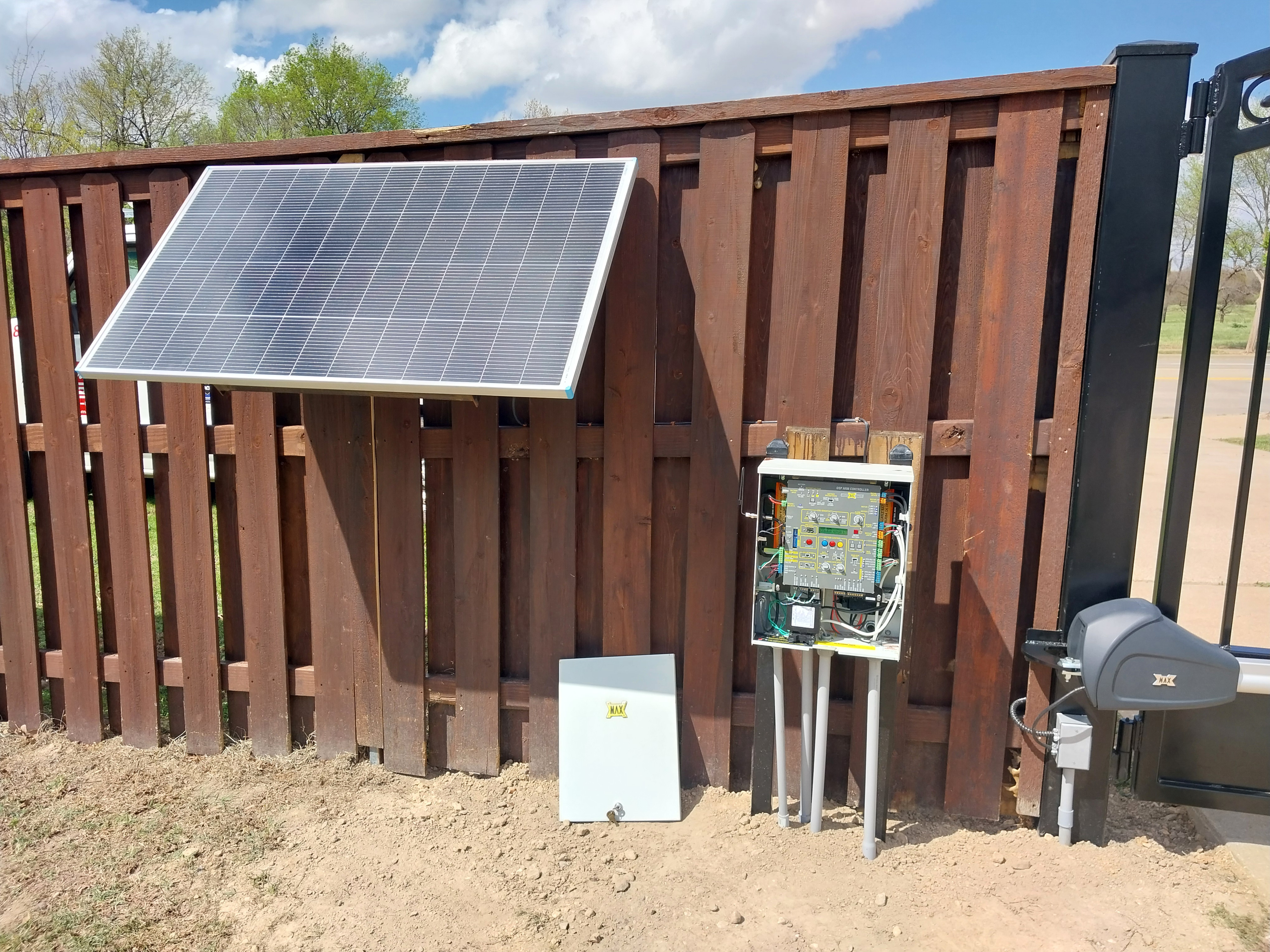
Automated gates fail in ways a fence does not, because they have moving parts, electronics and safety devices.
Thomas Fence repairs automated gates it did not build. Any brand, any style. That includes failed operators, malfunctioning safety devices, access control that has stopped working, and retrofits on older systems. The technicians hold the CGAT certification from the American Fence Association, covering operator mechanics and UL 325 safety standards. Safety devices are not optional, and a gate with failed ones should not be running.
Turnaround depends on what failed. Most gate service calls get a technician on site within one to three days. Photo eye adjustments and replacements, exit loop adjustments, error code resets and sometimes a keypad replacement get handled on that first trip, especially on a system Thomas Fence installed. If a part has to be ordered, add three to seven days after diagnosis.
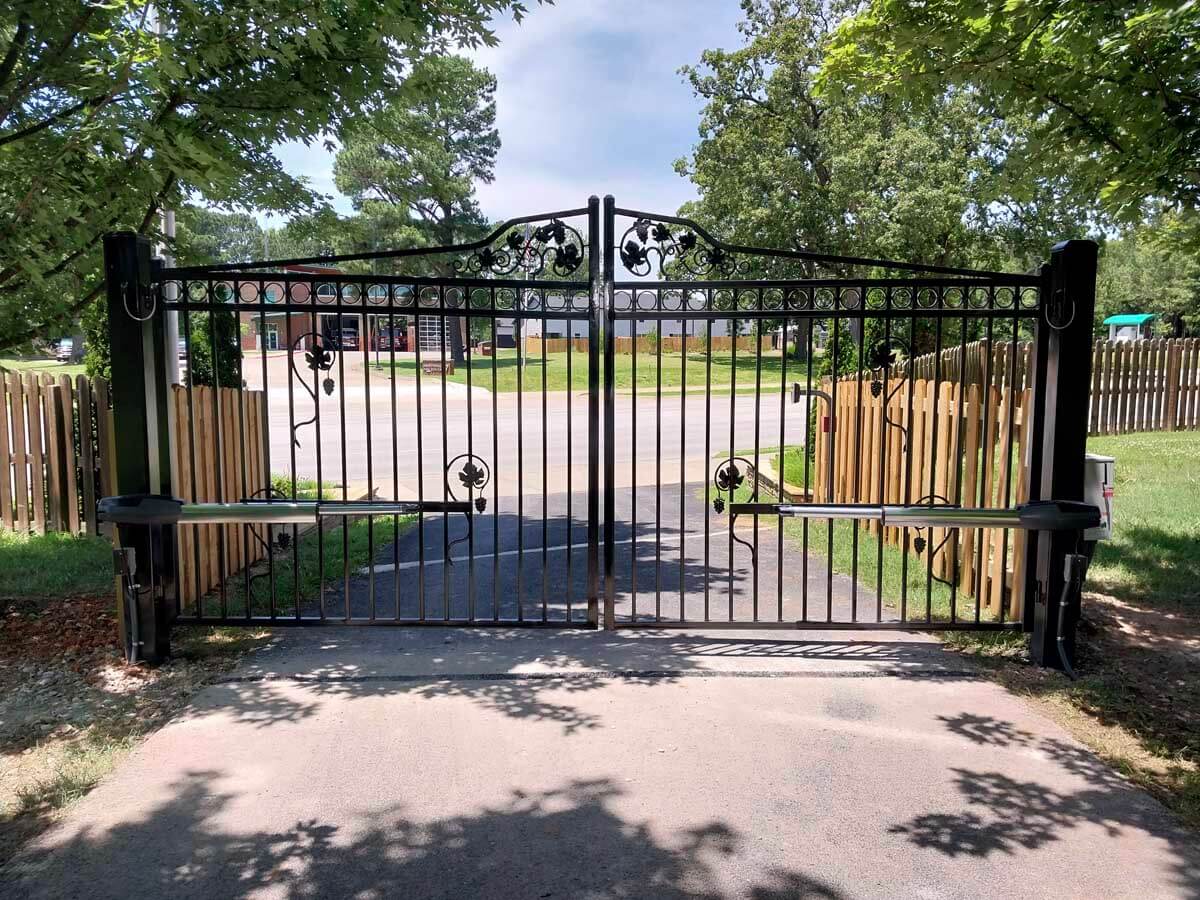
Two situations take longer, and you hear about them on the first visit. Custom fabrication runs one to three weeks depending on complexity and size. Material is not the holdup, because raw metal arrives the same day. Thomas Fence builds the gate in house, then sends it out to be powder coated, and that outside step is roughly half the total. A discontinued or one-off operator can be hard to source, so depending on its age and availability, replacing it is sometimes the only real answer. What Thomas Fence installs and services is at thomasfencear.com/gates/automated-gates/.
What to do now
Two or three posts moving is a repair. Most of them moving, or rails letting go all down the run, and you want both prices at the same visit. Either way, someone comes out and looks. Get in touch at thomasfencear.com/contact/.
Questions people ask
Why is my fence leaning?
Three causes that look identical from the patio. The post rotted at the ground line. Wind worked the footing loose in the ground. Or the posts were never set deep enough. Push on each post along the lean. Soft wood at the ground line means rot. A post that rocks with its concrete still attached means depth or a worked footing.
When is a leaning fence a repair instead of a replacement?
When two or three posts have failed and the rest of the run is sound. The failed post comes out, old concrete and all, a new post goes in set in concrete, and the rails and pickets go back on. Broken pickets from a limb, a dragging gate and a section that blew over on sound posts are repairs too.
When does a fence need to be replaced?
When the failures become a pattern. Posts gone across most of the run, rails pulling loose in many places because the wood has warped off the fasteners, or a fence set in dirt on ground that holds water. Any one is serious and two together settle it. Replacing posts one at a time down a whole line costs more than a new fence.
Does Thomas Fence price both repair and replacement?
Yes. The sales consultant prices both paths on the same visit, replacing the fence and replacing only the posts, and walks you through what each buys. Ask for both prices. The answer is not always the expensive one. A fence that looks bad from the patio may need two posts and an afternoon.
Does homeowners insurance cover storm damage to a fence?
It may. Ask your carrier before you decide, and expect them to want an itemized estimate. Impact damage from a tree or limb is usually a repair scoped to whatever the tree touched. Wind damage usually reveals a condition, rot, a loose footing or shallow posts, rather than causing one.
Does Thomas Fence repair automated gates it did not install?
Yes. Any brand, any style, including failed operators, malfunctioning safety devices and access control problems. Automated gates fail in ways a fence does not because they have moving parts, electronics and safety devices, and Thomas Fence holds the CGAT certification for automated gate work.
To talk about a fence in Northwest Arkansas, contact Thomas Fence at thomasfencear.com/contact/ or call (479) 636-4732. Thomas Fence, 653 Kawneer Dr, Springdale, AR 72764.