Chain link is the most affordable fence Thomas Fence installs, and galvanized at a standard residential height is the least expensive version of it. Black vinyl coated costs more. Height and gauge move the number, and so do two things most homeowners never think about, which are how many gates you want and how the fence line is shaped. This article covers what each choice buys you and where chain link fits a Northwest Arkansas yard.
What changes the cost
Five things move a chain link number more than anything else.
Height. A four foot fence uses less fabric, shorter posts and less concrete than a six foot fence over the same run. Height is usually the largest single lever a homeowner controls, and it is worth deciding on purpose.
Gauge. Gauge is the thickness of the wire in the fabric. Heavier wire costs more and holds up better under load and impact. Thomas Fence installs heavier gauge with larger posts and deeper footings for commercial and industrial work, and that specification is genuinely different from what goes on a backyard in Rogers.
Coating. Galvanized is the standard and the most cost effective option available. PVC coating, most commonly black, goes over galvanized fabric and adds color plus another layer of corrosion resistance. It costs more, and it looks considerably better, which is most of why people buy it.
The shape of the fence line. This is the one nobody expects. Short stretches from post to post, and a line that turns repeatedly to go around trees, a shed or parked equipment, cost more per foot than a straight run of the same length. Every corner is a terminal post, bracing and labor. If part of your line can be straightened by moving it a few feet, ask before the estimate is written.
Gates. Gates are where chain link quotes surprise people, and they add up fast. A gate is hardware, posts and fabrication, not a gap in the fence. A walk gate is modest. A wide double drive gate is not. The rule on both of these: the fewer gates and the longer the spans between terminal posts, the more cost efficient the fence. Count your gates before you compare bids, and make sure two bids have the same number.
Full detail on the options is at thomasfencear.com/fences/chain-link-fence/.
Galvanized
Galvanized chain link is the most widely used fence type for perimeter security in Northwest Arkansas, and it earns that on cost and durability together. Zinc coating over steel resists rust. Nothing to paint, nothing to stain. It goes up fast, which keeps labor down, and it is what most people picture when they hear chain link. It reads as functional, which in a back yard, behind a house or along a side lot line is exactly what most people want.
Black vinyl coated
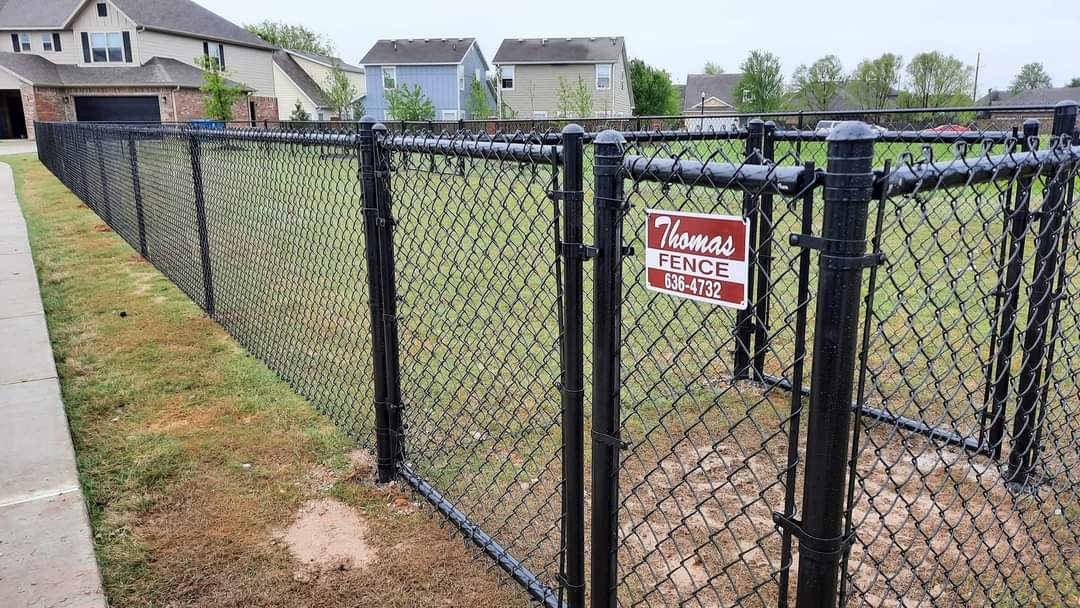
Black PVC coated chain link changes how the fence reads. Black fabric visually disappears against landscaping in a way galvanized never does. Stand at the back door and look at a black coated fence with trees behind it and your eye goes to the trees. Look at galvanized in the same spot and your eye goes to the fence.
That is why Thomas Fence installs a lot of black vinyl coated chain link in Bella Vista, where so many lots back up to the timber line. Homeowners there work it out quickly. Against standing woods, the black fence is the one you stop seeing.
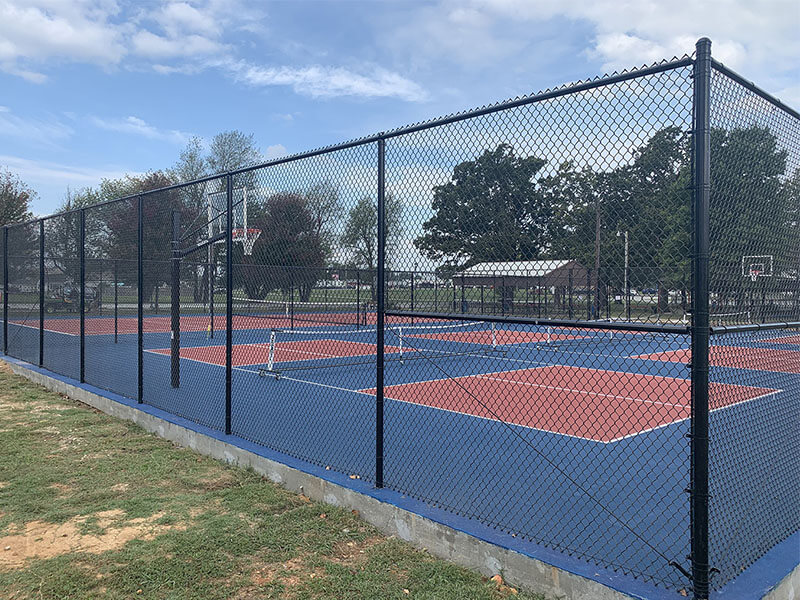
It is also why black coated goes around schools and parks, including the pickleball courts in Tontitown and dog park work in Fayetteville. It costs more than galvanized, and whether that is worth it depends on whether you will be looking at it. Green works on the same principle.
Privacy slats, and where they actually get used
Slats weave vertically through the fabric and turn an open fence into a solid visual barrier while keeping the structural strength chain link is known for.
In practice these are almost entirely a commercial product. Thomas Fence has hardly ever put slats on a residential job. Where they get used constantly is commercial work, because current building codes require visual screening on a lot of sites, and slats are one of three ways to satisfy that alongside a solid wood fence and an R panel fence.
So if you are screening a dumpster enclosure, an equipment yard or a service area to meet code, slats belong on the list. If you are a homeowner wanting privacy in a back yard, slats are not what people here choose, and a wood or vinyl privacy fence is the better fit. Slats also add wind load, which makes post spacing and footings matter more.
Where chain link fits
Dogs, and the reason is sight lines rather than strength. People assume chain link is the chew proof option. It is not. A determined dog can work through the fabric, and black vinyl coated is easier to chew than galvanized because the wire core inside the coating is a narrower gauge. If you have a chewer, say so, because the answer is gauge.
What chain link gives a dog is the ability to see out, and for many dogs that is the difference between a calm animal and a frustrated one. It works best where no neighbor is close. A common Bella Vista setup is chain link across the back of the lot so the dog can watch the woods, with something solid down the sides so it is not barking at neighbors ten feet away.
Pools, at the right height. A pool enclosure has to keep children out, and chain link at the required height with a self closing self latching gate does that. Check your city and your association on height and gate hardware first, because pool rules get specific.
Large lots and working areas. When you are fencing several hundred feet, the difference in cost per foot between chain link and anything else multiplies fast. On acreage around Lowell, Pea Ridge, Cave Springs or Garfield, chain link is often what makes it possible to fence the whole property rather than part of it. Same for equipment and storage areas, and the back half of a lot. Chain link is a working fence and it is good at working.
When it is the right amount of fence for what you need. Not every yard needs a privacy wall. A boundary, a safe place for the kids and the dog, and something still standing in twenty years is a legitimate goal, and chain link meets it for less than anything else. That is a sound decision, not a compromise.
Two things to check before you order
Height limits in the front yard. Most Northwest Arkansas cities cap front yard fence height at three feet or three and a half depending on the municipality, whatever the material. In practice, most residential chain link jobs run down the side property lines and stop at the front corners of the house rather than crossing the front yard at all. Confirm your city's number before planning a front yard fence of any kind.
Association rules. Many subdivisions in Bentonville, Rogers and Bella Vista prohibit chain link outright, restrict it to back yards, or require black coating. Read your covenants before you get a quote. A denial after installation is the most expensive way to learn this. If you need a privacy fence instead, compare the options at thomasfencear.com/fences/residential-fencing/.
Posts in concrete, every time
Thomas Fence sets all posts in concrete, on chain link the same as on wood and vinyl, and it is not an upgrade line on the estimate. A fence is only as straight as its posts. If you are comparing bids and one treats concrete as optional, that is worth a question.
Every Thomas Fence installation carries a written one year workmanship warranty. Chain link fabric and hardware manufacturers often carry their own material warranties on top of that, and your estimator can tell you the terms.
Questions people ask
What is the least expensive fence Thomas Fence installs?
Chain link, and galvanized at a standard residential height is the least expensive version of it. Black vinyl coated costs more. Height and gauge move the number, and so do the number of gates and the shape of the fence line. Full detail on the options is at thomasfencear.com/fences/chain-link-fence/.
What makes a chain link fence cost more?
Five things. Height, because a six foot fence uses more fabric, longer posts and more concrete than four foot. Gauge, the thickness of the wire. Coating, since PVC over galvanized adds cost. The shape of the line, because every corner is a terminal post with bracing. And gates, which are hardware and fabrication, not a gap in the fence.
Is black vinyl coated chain link worth the extra cost?
It depends on whether you will be looking at it. Black fabric visually disappears against landscaping and timber in a way galvanized never does, which is why Thomas Fence installs a lot of it in Bella Vista where lots back up to the woods. Galvanized is the most cost effective option and reads as functional.
Can I get privacy slats on a residential chain link fence?
You can, but almost nobody here does. Slats are almost entirely a commercial product, used to meet code screening requirements around dumpster enclosures, equipment yards and service areas. For privacy in a back yard, a wood or vinyl privacy fence is the better fit. Slats also add wind load.
Is chain link a good fence for dogs?
Yes, for sight lines rather than strength. Chain link lets a dog see out, and for many dogs that is the difference between calm and frustrated. It is not chew proof, and black vinyl coated is easier to chew than galvanized because the wire core is a narrower gauge. If you have a chewer, say so, because the answer is gauge.
Where does chain link fit best in Northwest Arkansas?
Dogs where no neighbor is close, pool enclosures at the required height with a self closing self latching gate, large lots and working areas where cost per foot multiplies fast, and equipment and storage areas. On acreage around Lowell, Pea Ridge, Cave Springs or Garfield, chain link is often what makes fencing the whole property possible.
To talk about a fence in Northwest Arkansas, contact Thomas Fence at thomasfencear.com/contact/ or call (479) 636-4732. Thomas Fence, 653 Kawneer Dr, Springdale, AR 72764.