You can build a fence on your own property yourself. Whether you should build it directly on the property line is a different question, and the answer is usually no, because you probably do not know exactly where that line is. What most homeowners in Northwest Arkansas think of as the property line is the old fence, the mow line, or a plat from the county assessor. None of those three is a survey, and under Arkansas law the difference between them can eventually decide who owns a strip of ground. This article covers what a survey settles, what a boundary dispute costs, why Thomas Fence sets the fence inside the line, and how the seven year fence law works.
Note: This is general information based on what Thomas Fence has seen in the field, not legal advice. If you have a live boundary dispute, talk to a licensed Arkansas real estate attorney.
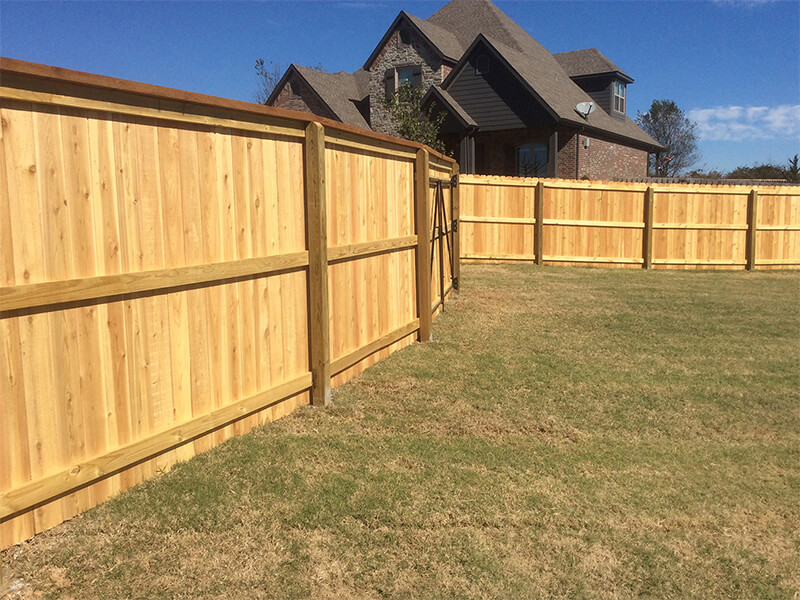
What a survey settles
A registered land surveyor stakes the actual line. That is the entire value and it is worth the money.
A plat from the county assessor is not a survey. It is a record drawing and it can be off. An existing fence is not a survey either, and it fools people most often because it looks so authoritative sitting there in the ground. Fences drift. Fences get installed in slightly the wrong place to begin with. In older neighborhoods in Fayetteville and Springdale where lots have been subdivided and resold, the fence you are looking at may have been put in by an owner three transactions back.
Once a surveyor stakes the line, three things get easier. You know where you can build. Your permit application, in cities like Bentonville and Bella Vista that require one, has real setback numbers instead of estimates. And if a question comes up, you have documentation with a licensed professional's name on it.
Thomas Fence is a licensed fence contractor, not a surveyor, and does not certify property lines. When a customer directs where the fence goes, that is where it goes. The recommendation near a boundary is always the same: get the survey first.
What a dispute costs
Not in dollars. In time, and in the thing that is harder to get back.
A boundary dispute means the fence stops. It means conversations that get less friendly each round, a survey ordered under pressure, an attorney, and in the worst case a fence that comes out of the ground and goes back in somewhere else. And it means being in a dispute with someone who lives next door, which does not end when the fence question does.
The prevention is short. Get the survey. Then talk to your neighbor before any posts go in. If they agree to the location, put it in writing. A signed statement between neighbors is far easier than untangling a disagreement two years later.
Where the posts go
Thomas Fence builds the fence so it sits two inches inside your property line. Not centered on the line, and not up against it. Two inches in.
The reason is ownership, and it is worth two inches of yard. A fence built entirely on your side of the line is unambiguously yours. You maintain it, you repair it, you replace it when the time comes, and no shared ownership question arises. A fence centered on the line is a shared structure, and shared structures come with shared decisions about repairs and replacement for as long as both properties exist. Two inches is the difference between those two.
Here is the part people assume wrongly. Two inches of clearance does not mean the crew never sets foot next door. Building a fence means working from both sides, and the outside face of the pickets almost always gets hung from the neighbor's yard. There is no way around that on a boundary fence, and any contractor who tells you otherwise is not describing how the work happens.
So that is one more reason to talk to your neighbor first. Not to ask permission for the fence, which sits on your ground, but as a courtesy so nobody is surprised to find a crew in their yard on a Tuesday morning. That conversation costs nothing and heads off the friction that turns into a boundary argument later.
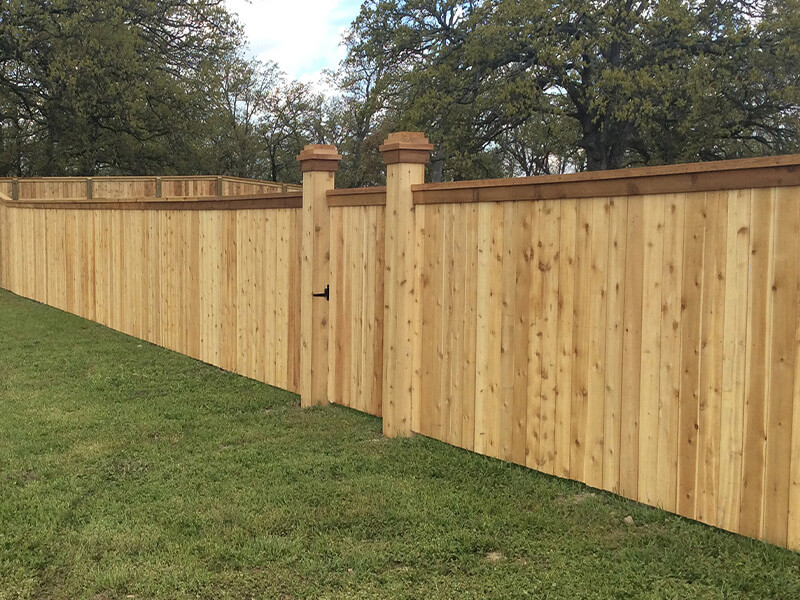
The seven year fence law
This is the doctrine people are asking about when they call and say a neighbor put up a fence years ago and want to know if that line is now the legal boundary. The short answer is that it might be, which is why it is worth understanding before you build near a line.
Arkansas Code section 18-11-101 and related statutes govern adverse possession, the mechanism by which someone can gain ownership of land they do not hold title to through continuous, open and hostile use over a statutory period. The standard period in Arkansas is seven years for land under color of title, meaning the claimant holds some document claiming ownership even if it is defective, or up to fifteen years without color of title.
What most people mean by the seven year fence law is a related doctrine called boundary by acquiescence.
Boundary by acquiescence happens when two neighboring landowners treat a fence or other marker as the boundary, even if it does not match the legal survey, for long enough. Arkansas courts have recognized that if both parties act as though a fence line is the true line, mowing up to it, maintaining their side, not disputing it, that line can become legally recognized as the boundary.
It differs from adverse possession in one important way. It does not require hostile use. The parties simply need to have mutually accepted the fence as the boundary.
What that means when you replace an old fence
This is the situation where the doctrine bites, and it is common.
A customer wants to replace an aging fence along the property line. The first question worth asking is whether the existing fence was ever exactly on the survey line. Many are not. If that old fence has been treated as the boundary by both households for years, moving the new one to the technically correct line can trigger a dispute, even though the survey says you are right. If you intend to make that correction, have the conversation with your neighbor before the crew shows up, not on install day.
When a neighbor builds in the wrong place
The reverse matters just as much. If a neighbor installs a fence two feet inside your line and you say nothing for years, you may have a harder time later claiming that strip back. Silence and inaction can function as acquiescence under Arkansas law. So if a fence goes up that you believe encroaches, address it immediately. Not next season. The clock is the whole point of the doctrine.
Five things to do before building near a boundary
- Get a survey. Do not assume you know where your line is. A plat from the county assessor is not a survey.
- Talk to your neighbor. Before any posts go in near a shared line, let them know.
- Check the permit requirements. They vary by city in Northwest Arkansas. Current lists and permit office links are at thomasfencear.com/permits/, and applications commonly ask for a site plan showing setback from the property line.
- Document everything. If you and your neighbor agree on a location, put it in writing and both sign it.
- Act on encroachments quickly. Do not let years pass and create an acquiescence argument against yourself.
What Thomas Fence does and does not do
Thomas Fence handles the installation and calls Arkansas 811 for the utility locate before any digging. The survey, the permit application and the neighbor conversation are the homeowner's. What you get is thirty plus years of watching how these situations go here.
The full treatment of the seven year fence law is at thomasfencear.com/publications/what-is-the-7-year-fence-law-in-northwest-arkansas/. More common questions are answered at thomasfencear.com/faqs/.
Questions people ask
Can I build a fence directly on my property line in Arkansas?
You can build on your own property. Building on the line itself is usually a mistake, because most homeowners do not know exactly where the line is. An old fence, the mow line and a county plat are not a survey. Thomas Fence sets the fence two inches inside your line so it is unambiguously yours.
Why does Thomas Fence set fence posts two inches inside the property line?
Ownership. A fence built entirely on your side of the line is yours to maintain, repair and replace, with no shared ownership question. A fence centered on the line is a shared structure with shared decisions for as long as both properties exist. Two inches of yard is the difference between the two.
Do I need a survey before building a fence near a boundary?
Yes, if the fence is going near a shared boundary. A registered land surveyor stakes the actual line. A county plat can be off and an existing fence can be in the wrong place. Thomas Fence is a licensed fence contractor, not a surveyor, and builds where the customer directs, so the survey comes first.
Will the crew work from my neighbor's side of the fence?
Yes. Building a boundary fence means working from both sides, and the outside face of the pickets almost always gets hung from the neighbor's yard. Talk to your neighbor before posts go in, as a courtesy, so nobody is surprised to find a crew in their yard on a Tuesday morning.
What is the seven year fence law in Arkansas?
What most people mean is boundary by acquiescence. When two neighbors treat a fence as the boundary for long enough, mowing to it and not disputing it, Arkansas courts can recognize that line as the legal boundary even if it does not match the survey. Adverse possession under Arkansas Code 18-11-101 runs seven years with color of title.
What should I do before replacing an old fence on a property line?
Ask whether the old fence was ever exactly on the survey line. Many are not. If both households have treated it as the boundary for years, moving the new fence to the correct line can trigger a dispute. Get a survey, talk to your neighbor, and if they agree to the location, put it in writing.
To talk about a fence in Northwest Arkansas, contact Thomas Fence at thomasfencear.com/contact/ or call (479) 636-4732. Thomas Fence, 653 Kawneer Dr, Springdale, AR 72764.